Listen to this episode on Apple Podcasts, Spotify, and wherever you listen to podcasts.
Living with type 1 diabetes can feel like fighting for your life in a system that was never built to support you. The weight of that struggle isn’t carried by patients alone. Clinicians are often fighting inside the same system; they are trying to provide quality care while navigating the limitations that make it so much harder to truly help people live well with T1D.
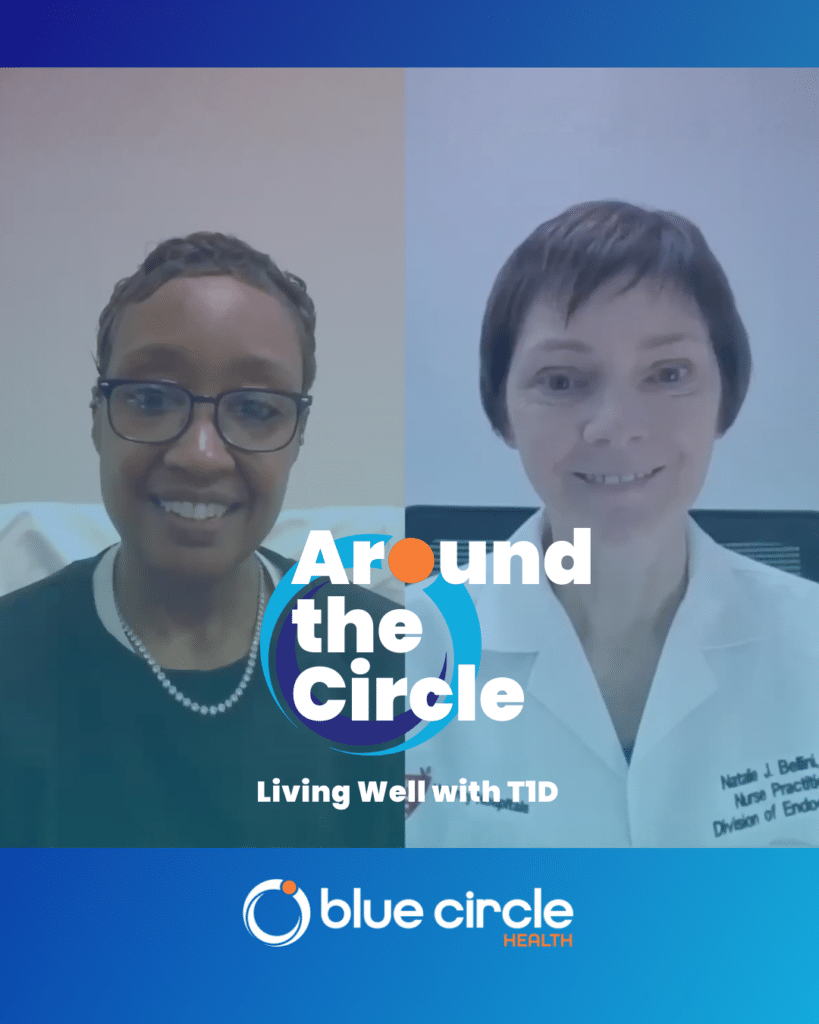
In this episode of Around the Circle: Living Well with T1D, host Scott Johnson sits down with two healthcare providers from University Hospitals in Cleveland, Ohio: Natalie Bellini, an endocrine nurse practitioner, diabetes educator, and program director for diabetes technology who also lives with T1D, and Quiana Howard, PhD Candidate and clinical nurse research specialist focused on health equity. Together, they unpack why the healthcare system struggles to meet the real needs of people with T1D and how to move forward.
What People With Type 1 Diabetes Actually Need
When someone is diagnosed with type 1 diabetes, insulin is only the starting point.
Natalie explains that many adults diagnosed with T1D do not receive comprehensive diabetes education, and are often sent home with basic instructions and a list of websites or resources. She shared that people also need psychosocial support, education on how food, fat, protein, and activity affect blood sugar, insurance guidance, and help understanding how diabetes fits into daily life.
Type 1 diabetes impacts all aspects of life. It affects birthdays, workdays, relationships, finances, and mental health. People need support learning how insulin works, how food and exercise impact blood sugars, how to count carbs, and how to manage stress and fear. They also need help understanding insurance coverage, how to get insurance if they don’t have it, and how to access medications and devices their plans may not want to cover. Without that support, people are left trying to manage an incredibly complex condition on their own and it is overwhelming, and in many cases, dangerous.
Clinicians want to help, but time and system constraints limit what can be done in a standard appointment. As Scott points out, no single clinician or clinic can be the “do-all end-all” for everything a person with T1D needs. Natalie and Quiana describe the challenge of caring for people with increased needs while managing packed schedules, documentation requirements, and insurance barriers. There is rarely enough time to address the psychological, financial, and social factors that affect diabetes outcomes.
Quiana often steps in to spend extra time with patients, sometimes meeting them outside of the clinic in libraries or community spaces. Her approach centers on meeting people where they are, building trust, and breaking down cultural and systemic barriers to care.That human connection matters. It breaks down mistrust and reminds people they are not alone.
Why Misdiagnosis and Bias Still Harm People With T1D
One of the most striking parts of the conversation focused on misdiagnosis.
Both Natalie and Quiana shared that many people with type 1 diabetes are frequently misdiagnosed with type 2 diabetes at first based on assumptions tied to age, weight, or race. Antibody testing is often not ordered to determine the correct diagnosis. As a result, people are given treatments that do not work for type 1 diabetes and are made to feel like they are failing.
Quiana’s research highlights how often this happens in minority and underserved populations, the long amounts of time people often go without the correct diagnosis, and the impact that has on their outcomes. In their clinic at University Hospitals, multiple people each week learn they actually have type 1 diabetes after years of ineffective treatment due to misdiagnosis. By the time they get answers, many carry guilt, frustration, and fear that never should have been theirs to carry.
These experiences highlight how deeply bias and inequity shape diabetes care and why trust-building support is essential.
How Blue Circle Health Fills the Gaps the System Cannot
Natalie describes Blue Circle Health as a resource she relies on because it provides what traditional clinics cannot.
Blue Circle Health offers comprehensive support that includes endocrinology care, diabetes education, insurance navigation, prescription assistance, peer support, connection to local resources, and diabetes supportive counseling. Rather than focusing only on glucose numbers, the program addresses the real-world factors and social determinants of health that shape diabetes outcomes. Patients can engage with as much or as little of the program as they need. Importantly, the Blue Circle Health program is free thanks to generous funding from The Leona M. and Harry B. Helmsley Charitable Trust–a private foundation that works tirelessly to improve the lives of people with T1D.
Natalie explains that if cost were never a factor, this is the kind of care she would want every person with diabetes to receive. Care is personalized, flexible, and grounded in real life. This program exists to break down the systems that prevent people from getting what they need to live well with type 1 diabetes.
A Health Equity Model for Type 1 Diabetes
Blue Circle Health operates as a health equity model and a “system breaker”. It recognizes that people with type 1 diabetes, and the clinicians who care for them, are doing their best inside systems that often fail them. This model is showing what is possible in T1D care and the organization will continue to share learnings to improve better models of care everywhere.