
Living with type 1 diabetes (T1D) requires constant decisions, adjustments, and attention. Even when you know what to do, the worry, frustration, and exhaustion of managing diabetes can take a toll.
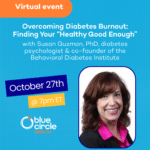
In a conversation on October 27, 2026, Scott Johnson, Senior Community Manager at Blue Circle Health, spoke with Dr. Susan Guzman, diabetes psychologist and co-founder and director of clinical education at the Behavioral Diabetes Institute. Dr. Guzman shares how people with T1D can address burnout by embracing a concept she calls “healthy good enough.” Her approach encourages people to recognize their efforts, practice self-compassion, and build a more sustainable relationship with T1D management.
What Is Diabetes Burnout?
Diabetes distress describes the emotional challenges of daily management. It can include worry, frustration, and feeling overwhelmed by the daily demands of care. It is not a diagnosis or a mental health disorder. When that emotional strain develops into exhaustion and makes management harder, it can become diabetes burnout.
Dr. Guzman explains that the constant focus on blood sugar targets and the language of being “in control” can contribute to this distress. Blood glucose levels change for many reasons, including factors outside a person’s awareness or influence. When people judge themselves by their numbers, they may begin to see every reading, meal, or other decision as a test they can pass or fail. Over time, this can lead to discouragement, self-criticism, and the feeling that their efforts are never enough.
How Perfectionism Can Contribute to Diabetes Burnout
T1D management can create a cycle of perfectionism. Someone may work extremely hard to reach their target numbers, become exhausted by the effort, and then feel tempted to step back from management altogether. Dr. Guzman describes this pattern as a perfectionism trap.
Importantly, blood sugar results do not always reflect how much effort someone has put into their care. Exercise, food, medication timing, and other factors can affect glucose levels in different ways, even when someone repeats the same routine. Dr. Guzman emphasizes that blood sugar numbers are not a measure of a person’s worth or success. She explains that recognizing the complexity of living with T1D can help people respond to difficult readings with less self-criticism.
What Does “Healthy Good Enough” Mean?
Dr. Guzman’s concept of healthy good enough offers a flexible, realistic approach to T1D management. It means doing your best within your circumstances at a given moment, while continuing to work toward goals that matter to you.
Healthy good enough is:
- Personal: Your goals reflect your values, priorities, and life circumstances.
- Flexible: Your approach can change as your needs and circumstances change.
- Focused on progress: Your efforts and learning matter, even when results do not match your expectations.
- Encouraging: You respond to challenges with self-compassion, kindness, and curiosity.
This approach also makes room for experimentation. For example, someone might try different approaches to managing blood sugar around pizza. If one approach does not work as expected, that experience can provide useful information for the next decision. The goal is to learn what works for your life and your priorities.
5 Ways to Build a Healthier Relationship With Diabetes
Dr. Guzman shares several practical strategies for addressing this form of distress and making daily management more sustainable.
1. Practice self-compassion
Pay attention to how you talk to yourself when your blood sugar does not respond as expected. Ask yourself: Would I say this to my child or my best friend? If the answer is no, consider what you would say to someone you care about. Try offering yourself that same kindness.
Self-compassion takes practice, especially when you have spent years responding to T1D challenges with self-criticism.
2. Approach blood sugar numbers with curiosity
Instead of judging yourself for an unexpected reading, treat it as information that can help guide your next decision. Ask, “What can I learn from this?” or “What can I try differently next time?”
Curiosity can help interrupt negative self-talk and make room for learning.
3. Recognize your daily efforts
It is easy to focus on outcomes and overlook the work that goes into daily management. Dr. Guzman recommends asking yourself, “What did I do well today?”
Maybe you remembered to pre-bolus, tried a new approach, or made a decision that supported your well-being. Recognizing these small victories helps you acknowledge your progress, even when your numbers are not where you hoped they would be.
4. Adapt your goals to your circumstances
Work demands, family challenges, and other life events can affect how much energy you have for T1D management. Dr. Guzman encourages people to consider their broader circumstances and discuss personalized goals with their healthcare team. Your goals should reflect your life, priorities, and needs.
5. Notice your emotional and behavioral cues
Frustration, anger, anxiety, and disappointment can signal that you are struggling. Behaviors such as avoiding a glucose monitor or reacting impulsively to a reading can also be cues to pause and reflect. She suggests asking yourself, “What’s the story I’m telling myself?”
Even if you recognize a pattern after the fact, reflecting on what happened can help you identify recurring thoughts and respond differently in the future.
Understanding Your Personal Diabetes Distress
Dr. Guzman recommends identifying the specific aspects of T1D hat cause the most emotional strain. The Type 1 Diabetes Distress Assessment System (T1-DDAS), available through diabetesdistress.org, offers a free survey.
The assessment can help identify common sources of distress, such as fear of hypoglycemia, worries about complications, family stress, or difficulties with management. These insights can help guide conversations with your healthcare team and identify areas where additional support may help.
You Deserve Support With the Emotional Side
Building a new relationship with T1D takes practice, but Dr. Guzman notes that focused attention and simple strategies can make a meaningful difference. You can learn to recognize self-critical thoughts, respond with compassion, and make decisions that reflect your personal goals and circumstances. As Dr. Guzman reminds listeners, your efforts matter, and you are worth the work.
At Blue Circle Health, we recognize that living with T1D involves emotional challenges as well as daily management decisions. Adults with T1D can access free virtual clinical care, education, and whole-person support alongside their existing care team in select states. Check your eligibility and learn if free support from Blue Circle Health is an option for you.
This article is intended for general educational and informational purposes only and is not a substitute for professional medical advice.