
A type 1 diabetes diagnosis can change everything at once. For young adults, that transition can be especially disorienting. They may be learning how to manage diabetes while also navigating college, work, relationships, finances, insurance, and greater independence.
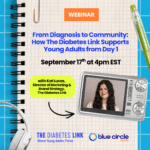
In a recent Blue Circle Health webinar, Scott Johnson spoke with Kat Lucas, Director of Marketing and Brand Strategy at The Diabetes Link, about what young adults need after diagnosis and how community, peer support, and practical resources can help.
Kat was diagnosed with type 1 diabetes at 18, during her first fall break from college. Her experience shaped much of the work she now does with The Diabetes Link.
The challenges of a type 1 diabetes diagnosis at 18
Kat’s diagnosis came in the form of a serious medical emergency. She was admitted to the ICU with diabetic ketoacidosis (DKA) and then had to quickly learn how to manage life with type 1 diabetes. She returned to college after only a few days in the hospital.
At the time, she was managing diabetes with multiple daily injections and finger sticks. She did not have access to today’s widespread diabetes technology or data-sharing tools. She also did not know whether her college offered diabetes support. This left her feeling very isolated and overwhelmed.
“I didn’t know anyone,” Kat explained. “If there was support on my campus, I was not aware of it.” She was legally an adult, but she did not yet have the knowledge or experience to know what questions to ask, what resources existed, or how to advocate for herself. That experience helped shape her perspective on what young adults need when they are diagnosed with diabetes.
Young adults are managing much more than diabetes
For a young adult, learning to manage type 1 diabetes happens alongside a major transition into independence. There are questions about housing, employment, insurance, relationships, school, finances, and everyday responsibilities. Diabetes becomes another major part of an already complicated stage of life.
Kat described the diagnosis as “very disorienting.” When someone is in survival mode, they may not have the capacity to think about the support they might need months or years later. That is one reason resources designed specifically for young adults can be so valuable. They can address the practical and emotional realities of living with diabetes, not only the clinical aspects.
The Diabetes Link puts community at the center
The Diabetes Link originally operated as the College Diabetes Network, with a focus on supporting students with diabetes on college campuses. The organization has since broadened its focus to young adults more generally, recognizing that not every young adult attends college.
Today, The Diabetes Link supports young adults through a combination of online and in-person community, educational resources, and peer connection. That includes campus chapters, in-person meetups, social media, and an online Discord community. The goal is to give young adults different ways to connect based on what feels comfortable for them. For someone who does not want to attend an in-person meeting, an online community can provide another entry point. For someone who prefers face-to-face connection, local meetups can offer that opportunity.
Why peer support matters
Living with diabetes comes with experiences that can be difficult to explain to someone who has not lived through them. Kat described the value of being able to say, “Oh, you too? I experienced that too.” That kind of recognition can help normalize experiences that might otherwise feel isolating.
The Diabetes Link’s Discord community provides a place where young adults can ask questions, celebrate milestones, share experiences, vent, and connect with other people living with diabetes. The community is also intentionally peer-led, with young adults helping moderate the space. For Kat, that peer perspective is important because lived experience adds something different from clinical expertise. Healthcare professionals play a critical role in diabetes care, but a peer can understand what it is like to experience a severe low and then have to return to class or work. They can understand the challenges of managing diabetes alongside friendships, roommates, school, or a job.
Making diabetes resources easier to use
The Diabetes Link is also changing how it delivers educational resources. Rather than expecting young adults to read long, linear materials from beginning to end, the organization is developing resources in different formats, including written information, videos, notes that can be saved to a phone, and playlists. This approach is particularly important for newly diagnosed young adults.
Kat described her own experience after diagnosis, when she received pamphlets and basic education but was still overwhelmed and disoriented. The organization’s new newly diagnosed experience is designed to recognize that learning about diabetes does not happen in a straight line. Someone newly diagnosed may need different information at different moments. They may have questions about choosing a care team, diabetes technology, food, relationships, or simply how to get through a difficult day. The goal is to provide resources people can use when they are ready for them.
Resources for the parts of life that affect diabetes
The Diabetes Link also addresses topics that may not always fit neatly into a clinical appointment, but can have a major impact on someone’s experience of diabetes.
In this light, The Link’s resources cover areas including:
- Mental health
- Insurance and financial resources
- Sex and dating
- Partying
- Relationships with parents and caregivers
- Preparing for college
- Diabetes technology
- Choosing a healthcare team
The organization also provides resources for parents, caregivers, and healthcare professionals. One example is a communication agreement designed to help young adults and their parents establish boundaries around diabetes data and support as the young adult gains independence. These conversations can be difficult to have, but they are part of learning how to live with diabetes as an adult.
Building trust between patients and care teams
Another important theme of the conversation was trust. Kat emphasized that trust between a young adult and their healthcare team can affect whether they feel comfortable asking questions and sharing what is really happening in their lives.
Diabetes management does not always follow the predictable patterns described in educational materials. Stress, finances, relationships, work, and countless other factors can affect someone’s ability to manage diabetes. Kat shared an example of how stress affected her own diabetes management and how her current endocrinologist asks an important question: “What, if anything, is getting in the way of your care?” That question creates space to discuss the realities behind the numbers.
Community resources can help people recognize those challenges and then bring better questions back to their healthcare teams.
Resources that complement clinical care
The Diabetes Link does not position its resources as a replacement for healthcare professionals. Instead, its resources are designed to complement clinical care by addressing topics that may not fit into a short medical appointment.
The organization’s resources are clinically vetted and informed, and young adults also review resources to provide feedback about whether they feel relevant and relatable. That combination of clinical expertise and lived experience helps shape resources around what young adults actually need.
You do not have to navigate diabetes alone
A diabetes diagnosis can create a steep learning curve, particularly during young adulthood. But support can come from more than one place. Healthcare teams provide essential medical care. Educational resources can help answer questions. And peer communities can provide something equally important: the reassurance that other people understand what you’re experiencing.
As Kat’s story demonstrates, the right resources may not have been available or obvious when someone was first diagnosed; but creating those connections can help make the experience less isolating for the next person. For young adults living with diabetes, finding community can be a meaningful part of learning how to navigate life with diabetes. And sometimes, knowing that someone else has been there too is a powerful place to start. Blue Circle Health is proud to partner with The Diabetes Link to connect clinical care with community, giving people with diabetes access to both trusted healthcare support and meaningful peer connection.
Learn more: Visit The Diabetes Link to explore its resources, online community, and support for young adults living with diabetes.
Looking for more T1D support? Blue Circle Health provides free virtual clinical care, education, and support for eligible adults living with type 1 diabetes.